
The Program
How does it work?
The main objective of the TESS training program is to prepare trainees to design and implement sustainable, inclusive, and equitable solutions to complex global challenges by integrating disciplinary expertise in each trainee’s field with value-based leadership, interdisciplinary collaboration, community engagement, and policy fluency. Each trainee will undertake a disciplinary research project (e.g., agriculture, quantum physics, computer, civil, mechanical or chemical engineering, energy transitions, water management, health, political science, or any number of disciplinary backgrounds) in collaboration with their supervisor(s) while enrolled in TESS.
The program is split into three progressive levels: Foundation (core training in four modules on values-based science, knowledge co- production, science communication, and science policy), Application (mobility experiences such as internships, placements, and community-engaged projects), and Leadership (leadership roles, curriculum co-development, and advanced sustainability topics).
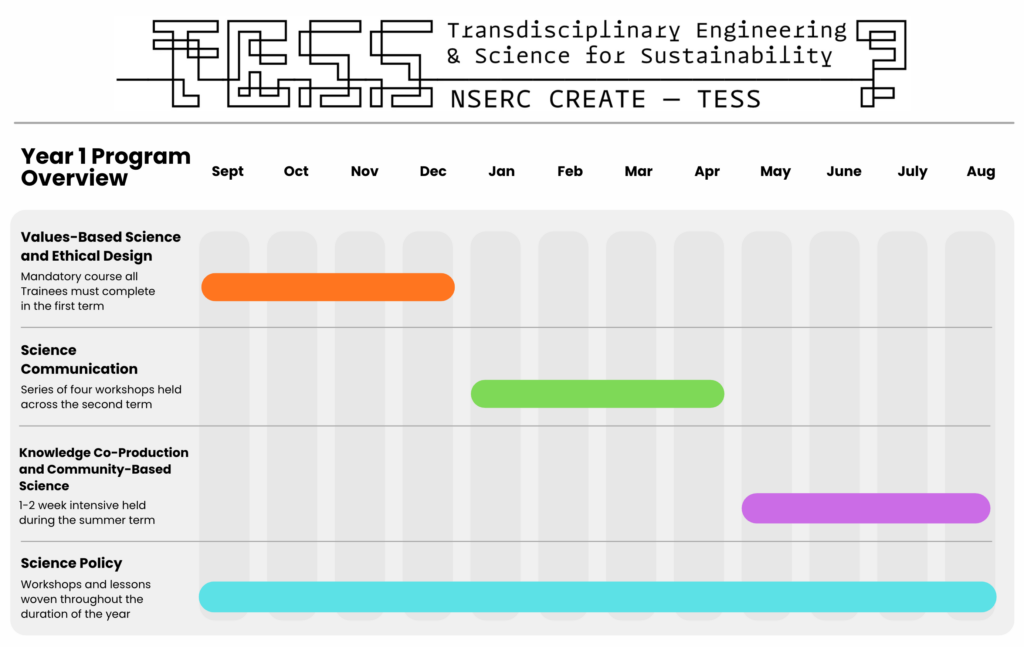
| Year 1 – Foundation Participants: Bachelors, Masters, PhD | Year 2 – Application Participants: Masters, PhD | Year 3-4 – Leadership Participants: Masters, PhD, PDF’s |
|---|---|---|
| Value-based Science Science Communication Knowledge Co-production Science Policy | 1-2 Month: Internship / Exchange / Community Project Policy Engagement | Curriculum Co-development & Mentorship Scenario Planning Policy Advocacy |
TESS is a training program designed to be integrated with the student’s thesis research completed in their home department. This is value-added training and NOT a degree granting program. The program is delivered by collaborators from several partner institutions and requires a commitment by trainees to attend all training elements. Trainees then remain in the program for the duration of their graduate degrees to ensure continued development of cohorts and skills, but with lower time commitments in years two/three/four, with a large portion of programmatic training elements completed in the first year of participation.
Overview
Training Modules
All TESS trainees will receive disciplinary scientific training directly from their supervisor(s), ensuring depth and technical excellence in their given fields. What TESS adds is a suite of complementary, value-added modules designed to fill the gaps that traditional graduate training leaves unaddressed. Too often, graduate programs focus exclusively on technical mastery while overlooking ethical, communication, community, and policy dimensions.
Module 1: Values-Based Science and Ethical Design
This module equips trainees to integrate ethical considerations and IDEA principles into research and innovation. This approach is rooted in Responsible Research and Innovation (RRI) and Value Sensitive Design (VSD). Taken together, these frameworks ensure trainees learn the skills needed to create solutions that are anticipatory and reactive while incorporating human values—such as well-being, dignity, and justice—into the design of technologies, systems, policies, and processes.
Module 2: Science Communication.
This module responds to the urgent challenge of effective research dissemination and communication. Too often, groundbreaking research remains confined to academic circles or is misunderstood when it reaches the public. Projects connect engineering, science, social science and broader sustainability thinking to generate integrated research outcomes.
Module 3: Knowledge Co-Production and Community-Based Science.
This module provides trainees the tools necessary to begin to work with communities, and valuing local expertise alongside academic knowledge. Drawing from principles of citizen science, community-led research, disability and health justice, and participatory design, it emphasizes creating knowledge with communities rather than for them. This approach recognizes that IDEA in research strengthens the entire research enterprise by bringing in perspectives, voices, and approaches that might otherwise be overlooked.
Module 4: Science Policy.
This module closes the gap between research and governance and enables HQP to let evidence shape policy. Too often, policy debates reflect deep biases and limited literacy, especially around disability, equity, and sustainability. These problems are compounded by scarce data on how emerging technologies affect marginalized groups. By embedding policy training, disability studies, and IDEA principles into science and engineering training, this module prepares trainees to engage credibly and ethically in policy arenas.
Outcomes
Key technical skills
TESS trainees will acquire disciplinary, transdisciplinary, and sustainability technical skills throughout the program.
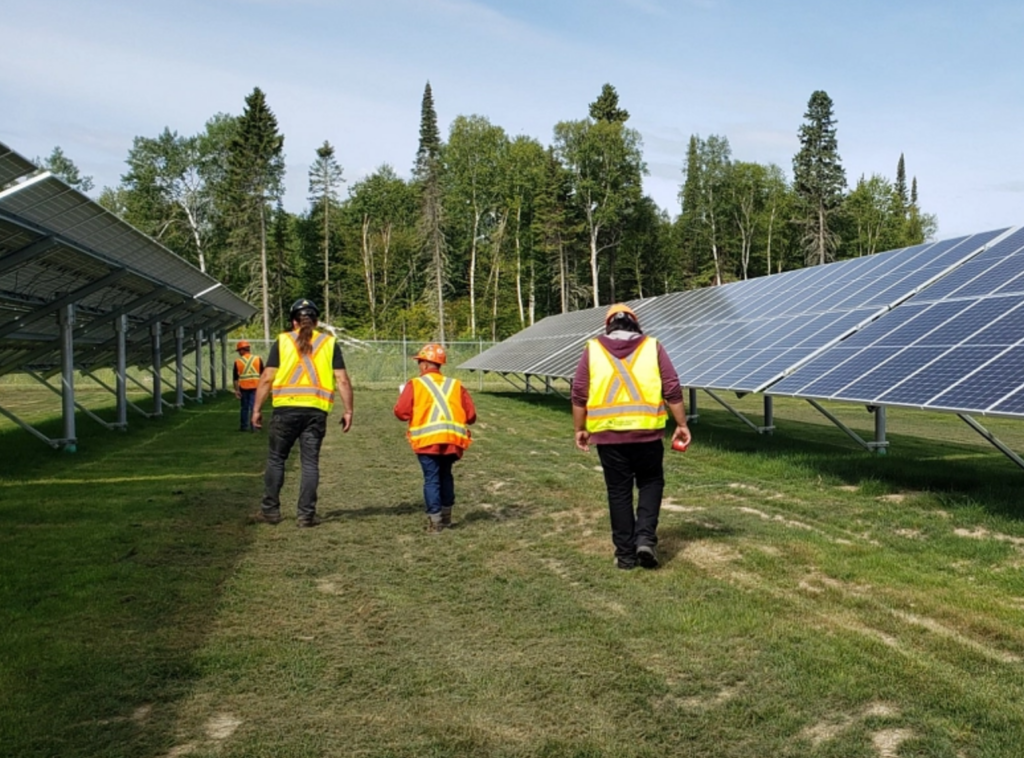
Disciplinary technical skills
- Trainees will gain disciplinary skills through their primary research programs by taking courses and working on their research with mentoring received from their supervisors.
- These disciplinary research areas include anything from quantum computing, mechanical systems, energy transitions, environmental modelling, water systems, and materials science to public policy, geography, and sociology.
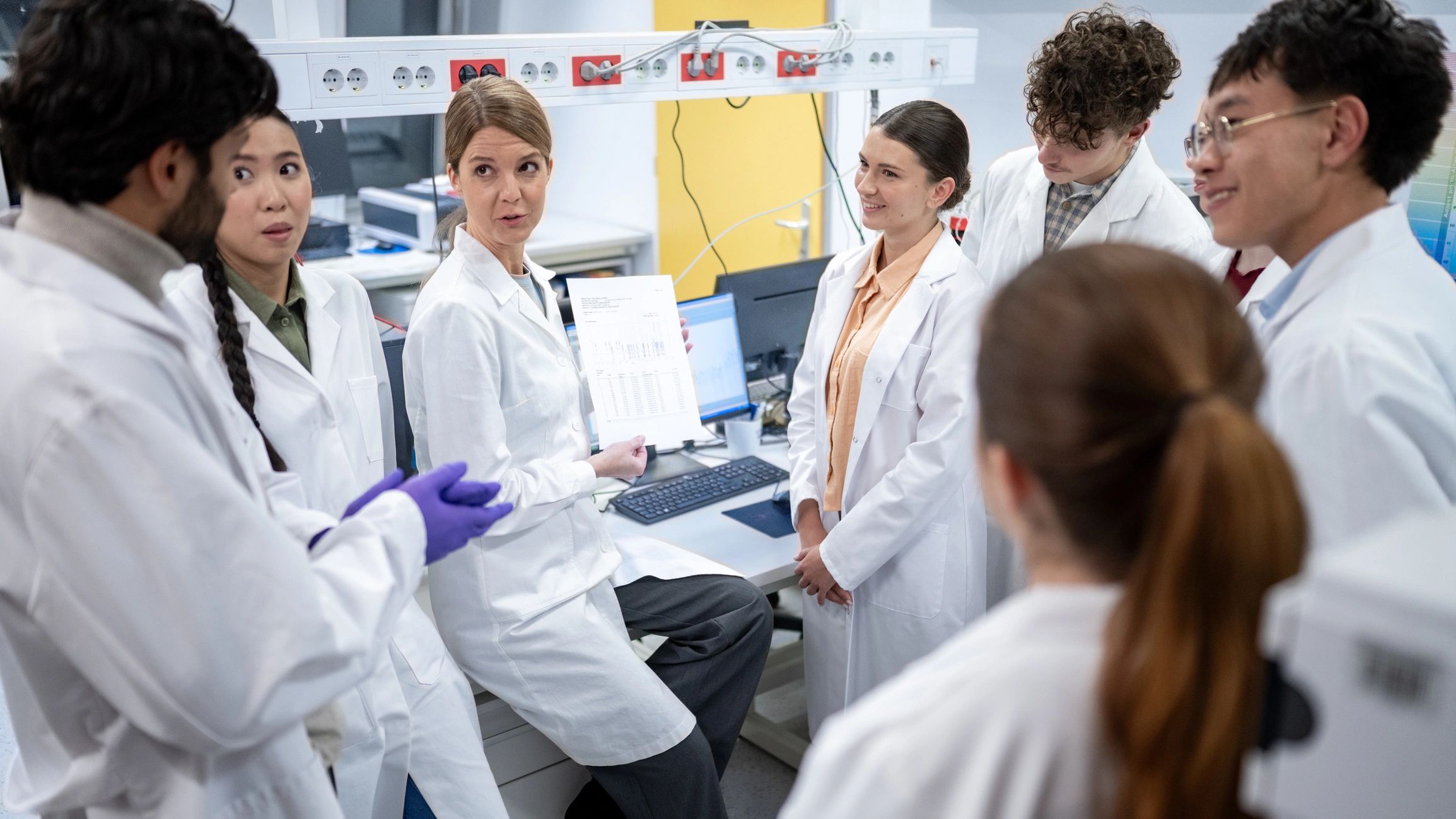
Transdisciplinary technical skills
- Trainees will acquire transdisciplinary technical competencies through the program’s integrated training modules and collaborative projects. Participation in transdisciplinary teams, research residencies, and collaborations will enable trainees to apply methodologies from multiple scientific, engineering, and social science domains.
- Trainees will also strengthen their integration skills by working alongside peers from other disciplines and engaging in their assigned learning communities, and through community-based knowledge co-production.
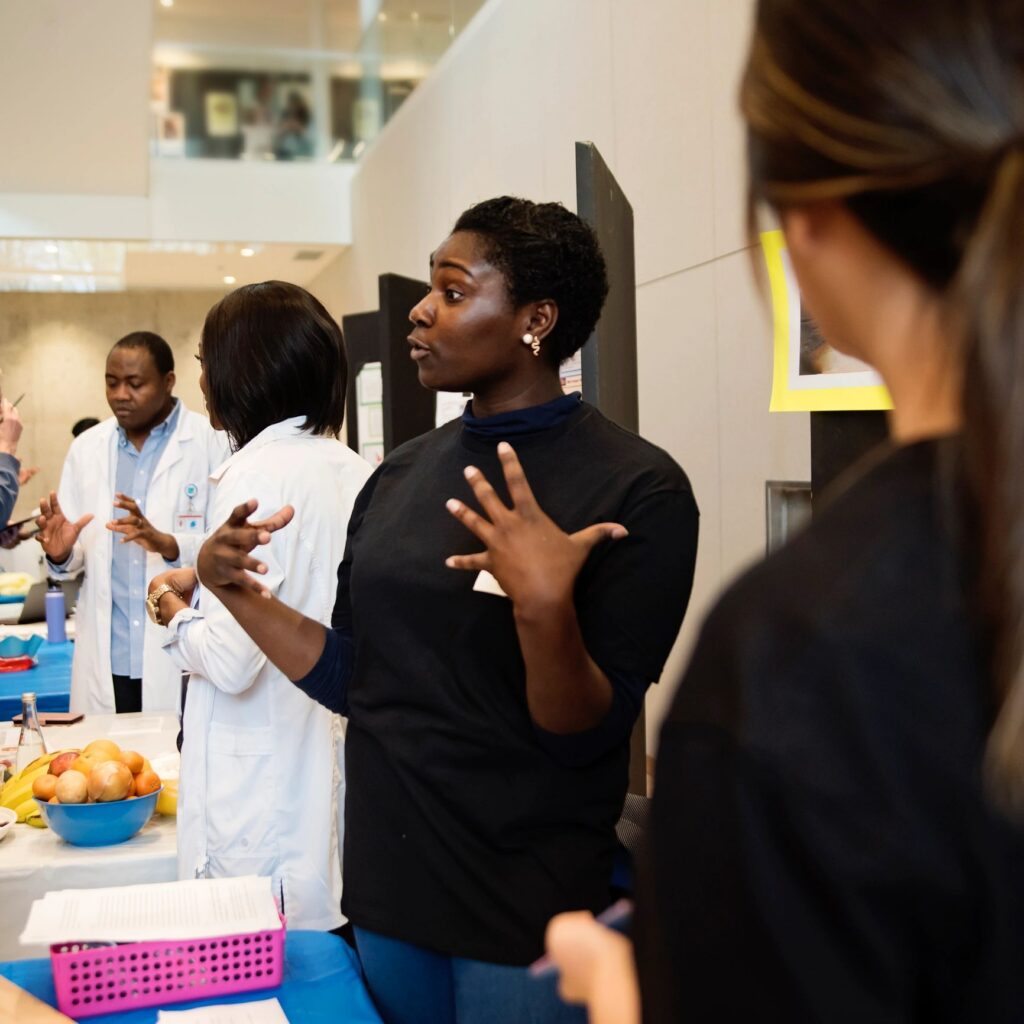
Sustainability technical skills.
- Trainees will be equipped with advanced, sustainability-oriented technical skills that complement their disciplinary research.
- Trainees will gain the tools to holistically unpack the environmental and social impacts of engineering, policy, and scientific solutions.
- Trainees will learn to integrate circular economy principles into design, apply multi-objective optimization techniques that balance efficiency, equity, and ecological limits.